
Weight & Metabolic Regulation
Metabolic regulation reflects coordinated signaling between nutrient availability, hormonal activity, stress physiology, and digestive function.

Systemic impact
Metabolic regulation is systemic. It reflects the dynamic coordination of hormonal signaling, nutrient availability, gut function, and stress physiology.
When regulatory coherence weakens, the consequences rarely remain isolated. They may surface as weight variability, energy instability, cardiometabolic strain, or persistent digestive discomfort.
The relevant question is not whether metabolism influences weight — but how well these interconnected systems are functioning as a whole.
Regulatory drivers
Nutrient availability & micronutrient sufficiency
Metabolic efficiency depends on adequate substrate availability and micronutrient sufficiency.
- B-vitamins (B1, B2, B6, B12) function as enzymatic co-factors in mitochondrial energy production.
- Magnesium and iron are central to ATP synthesis and oxygen transport.
- Zinc, selenium, and iodine support thyroid hormone synthesis and conversion.
- Both deficiencies and excesses can alter metabolic throughput, hormonal signaling, and cellular energy dynamics.
Hormonal regulation
Hormones coordinate metabolic pace, storage, and energy allocation.
-
Thyroid hormones (T3, T4, TSH) influence basal metabolic rate and systemic energy expenditure.
-
Insulin regulates glucose partitioning and fat storage.
-
Cortisol modulates stress adaptation, fat distribution, and appetite signaling.
-
Dysregulation across these axes can shift metabolism toward weight instability, metabolic syndrome patterns, or persistent fatigue.
Gut microbiota & digestive function
Digestive efficiency and microbial composition influence metabolic signaling.
-
Microbial diversity affects caloric extraction, short-chain fatty acid production, and inflammatory tone.
-
Dysbiosis is associated with adiposity, cravings, and systemic low-grade inflammation.
-
Impaired digestion or food sensitivities may alter absorption kinetics and metabolic storage patterns.
Inflammatory load & oxidative stress
Chronic inflammatory burden disrupts metabolic signaling networks.
-
Low-grade inflammation interferes with insulin and thyroid receptor sensitivity.
-
It shifts metabolic balance toward energy conservation and fat accumulation.
-
Oxidative stress modulates mitochondrial efficiency and cellular resilience.
Lifestyle regulatory inputs
Daily behavioral patterns shape metabolic coherence.
-
Sleep quality influences leptin, ghrelin, and circadian metabolic timing.
-
Physical activity supports mitochondrial density and insulin sensitivity.
-
Meal timing interacts with circadian rhythm and glucose regulation.
-
Psychological stress alters cortisol dynamics and metabolic allocation.
Professional Integration
Conventional assessments tend to isolate individual markers. While useful, they rarely capture regulatory coherence across systems.
BodyMap adopts a functional mapping approach. By analyzing hair-derived biological patterns over time, it integrates micronutrient dynamics, hormonal signaling, stress load, digestive function, and inflammatory tone into a structured systemic overview.
Within the Weight & Metabolic Regulation domain, the report may surface:
-
Micronutrient distribution patterns, including potential imbalances in iron, magnesium, zinc, iodine, and related cofactors
-
Functional food reactivity influencing digestive efficiency and metabolic allocation
-
Stress-related and inflammatory indicators associated with fat storage and energy variability
-
Thyroid and hormone-related regulatory signals affecting metabolic pace
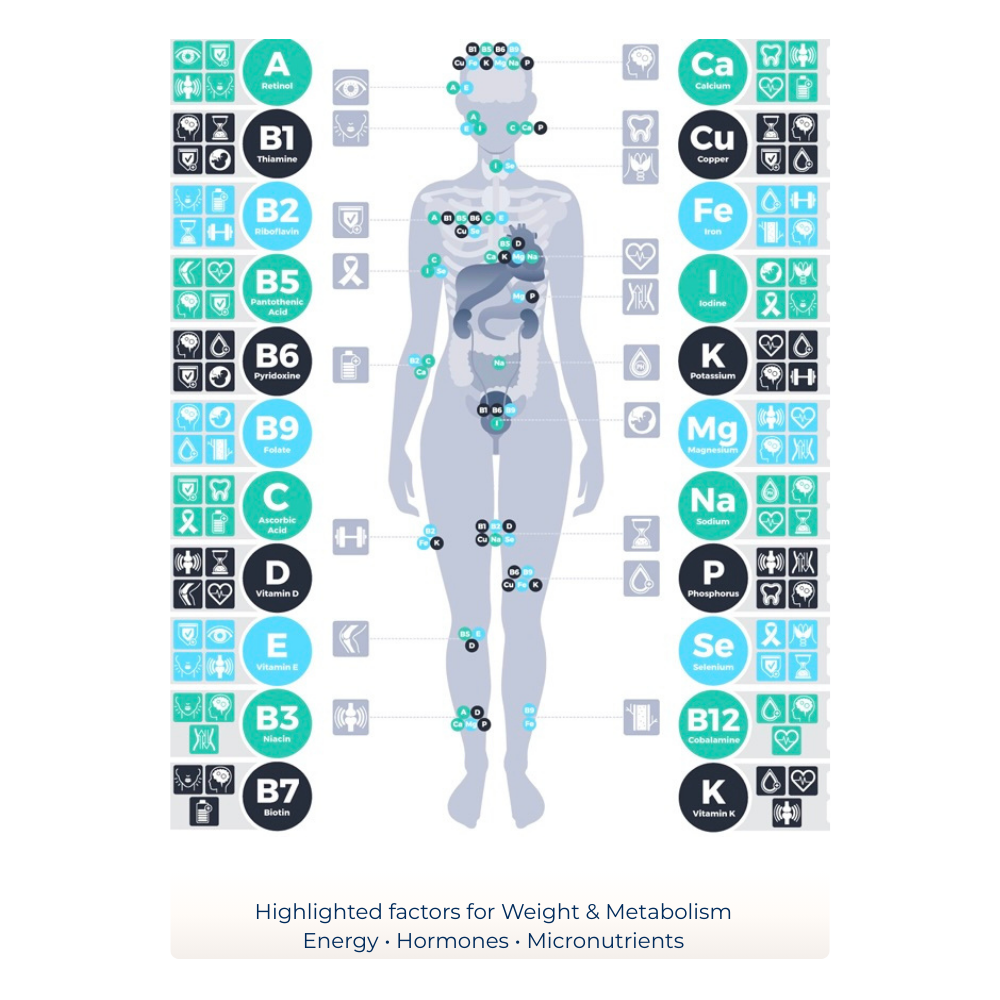
Rather than isolated data points, the report provides a functional map of systemic balance — supporting informed, targeted adjustments across interconnected domains.
Report outputs
BodyMap translates identified metabolic patterns into structured orientation domains.
The report may include:
-
Nutritional axes relevant to metabolic support and sensitivity-related friction
-
Prioritization of micronutrient distribution patterns associated with metabolic pace and energy stability
-
Lifestyle modulation domains influencing sleep architecture, stress load, and activity rhythm as regulatory inputs
-
Sequenced intervention layers to support structured implementation across interconnected domains
This framework supports integrative decision-making rather than isolated, reactive adjustments.
FAQ
Here are some of the most common questions about metabolism and how BodyMap can help.
In which situations can BodyMap support metabolic or weight-related concerns?
BodyMap may support cases where weight fluctuation, metabolic resistance, or energy instability persist despite conventional dietary strategies.
It structures regulatory signals that may influence metabolic efficiency beyond caloric balance alone.
How does BodyMap assist in understanding metabolic resistance?
Rather than focusing exclusively on caloric intake or macronutrient ratios, BodyMap organizes patterns related to stress modulation, inflammatory load, micronutrient signaling, and hormonal interaction.
This supports professionals in identifying whether weight dynamics may reflect systemic regulatory friction rather than simple intake imbalance.
Does BodyMap provide quantitative biomarkers or diagnostic thresholds?
BodyMap does not provide quantitative biomarkers or diagnostic thresholds.
It offers structured orientation across regulatory domains, which may inform whether targeted laboratory confirmation is warranted.
It complements metabolic panels without replacing clinical diagnostics.
What practical value does BodyMap add in weight and performance programs?
BodyMap enables professionals and organizations to frame metabolic challenges within a systemic regulatory context.
Across clinical, performance, or corporate settings, this supports:
• Earlier orientation before intensive diagnostic pathways
• Integration of nutritional and recovery strategies
• Structured communication around weight plateau or energy instability
• Complementary positioning alongside medical or performance programming
BodyMap supports metabolic adaptation by reinforcing regulatory coherence rather than focusing solely on caloric manipulation.
Explore how BodyMap can support your professional framework
Contact us to discuss integration within your clinical, performance, or preventive setting.