
Sleep & Energy Regulation
Restorative sleep and sustained energy depend on integrated endocrine, metabolic, stress-axis, and circadian regulation.

Systemic impact
Sleep architecture and energy stability depend on coordinated circadian signaling, endocrine modulation, metabolic efficiency, and stress-axis regulation. Disruption across these systems often extends beyond isolated sleep complaints.
It may present as:
-
Non-restorative sleep despite adequate duration
-
Fragmented or unstable sleep cycles
-
Persistent daytime fatigue
-
Reduced cognitive stamina or stress resilience
Such patterns frequently reflect shifts in cortisol dynamics, thyroid signaling, mitochondrial energy support, or inflammatory load. Within this framework, BodyMap contributes a structured layer of functional orientation that may support further clinical interpretation.
Regulatory drivers
Circadian rhythm & endocrine signaling
-
Melatonin–cortisol dynamics coordinate sleep–wake cycles and circadian phase stability
-
Disruption in stress-axis timing may alter nocturnal recovery architecture
Micronutrient-dependent regulation
-
Magnesium contributes to neuromuscular relaxation and parasympathetic activation
-
B-vitamins (B6, B12, folate) participate in neurotransmitter pathways influencing sleep regulation
-
Iron status may affect oxygen delivery and neuromuscular signaling relevant to sleep stability
Stress load & recovery modulation
-
Sustained sympathetic activation may interfere with restorative sleep phases
-
Emotional and physiological stress influence overnight metabolic recalibration
Gut–neuroendocrine interface
-
Microbiome activity influences serotonin pathways involved in melatonin synthesis
-
Digestive reactivity may alter autonomic balance affecting sleep quality
Professional Integration
Polysomnography and laboratory testing can identify defined sleep disorders or endocrine abnormalities. However, point-in-time measurements may not fully reflect longitudinal regulatory patterns influencing restorative capacity and energy stability.
BodyMap introduces a pattern-based layer by identifying functional trends reflected in hair-derived data.
Within the Sleep & Energy Regulation domain, the report may surface:
-
Micronutrient distribution patterns relevant to neuromuscular relaxation and mitochondrial energy support
-
Stress-axis dynamics potentially affecting circadian rhythm stability
-
Gut-related signals associated with inflammatory load or autonomic imbalance influencing sleep quality
-
Oxidative stress markers relevant to cellular energy efficiency
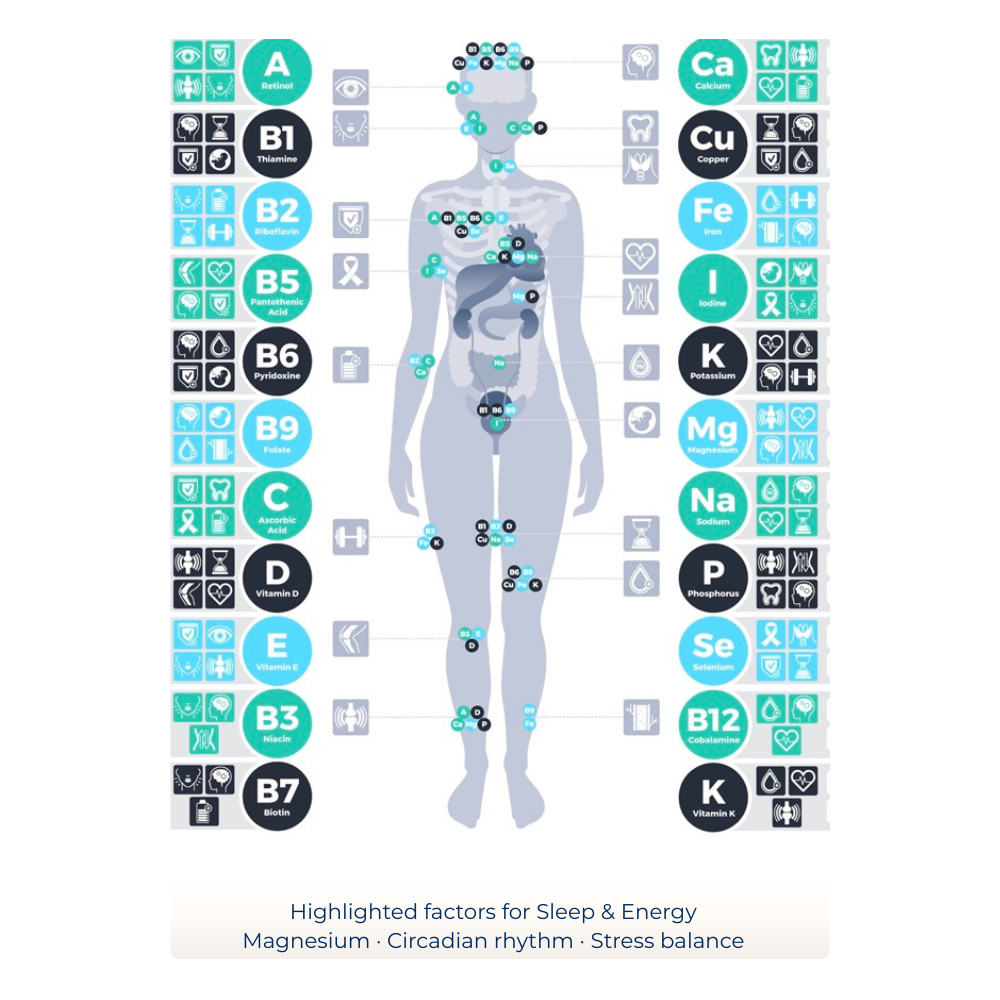
These findings are not diagnostic outputs. They function as orientation markers that may support integrative interpretation and guide further laboratory assessment or clinical correlation when indicated.
Report outputs
BodyMap translates identified patterns into structured orientation domains.
The report may include:
-
Nutritional axes relevant to neuromuscular relaxation and mitochondrial energy support
-
Lifestyle modulation domains influencing circadian stability and stress-axis timing
-
Gut-related patterns potentially affecting autonomic balance and inflammatory load
-
Sequenced intervention priorities to support structured implementation across regulatory layers
This framework supports integrative interpretation rather than isolated symptom-focused adjustments.
FAQ
Here are some of the most common questions about sleep, energy regulation and how BodyMap can help.
In which situations can BodyMap support sleep-related cases?
BodyMap can be considered when patients report persistent fatigue, non-restorative sleep, or fluctuating energy despite standard lifestyle guidance or inconclusive laboratory results.
It helps structure multifactorial contributors into a coherent functional overview.
How does BodyMap assist with clinical prioritization?
Rather than focusing on isolated parameters, BodyMap organizes keratin-derived signals across interconnected domains.
This supports professionals in determining whether sleep disturbance patterns appear primarily stress-related, nutrient-linked, inflammatory, hormonal, or multi-factorial.
Does BodyMap replace laboratory or sleep diagnostics?
No. BodyMap does not generate diagnostic thresholds or clinical values.
It may, however, support decisions regarding whether laboratory confirmation is indicated and which domain warrants further evaluation.
What added value does BodyMap provide in patient communication?
The structured visual framework helps professionals explain complex contributors to fatigue and sleep complaints in an integrated manner.
This supports alignment, adherence, and structured intervention planning within preventive or functional health strategies.
Explore how BodyMap can support your professional framework
Contact us to discuss integration within your clinical, performance, or preventive setting.