
Immunity Resilience
Immune resilience depends on coordinated inflammatory control, micronutrient sufficiency, gut integrity, and adaptive stress regulation.

Systemic impact
Immune resilience reflects coordinated inflammatory control, micronutrient sufficiency, gut barrier integrity, and adaptive stress regulation. Disruption within these interconnected systems may alter the body’s capacity to maintain physiological stability.
It may present as:
-
Increased susceptibility to recurrent infections
-
Prolonged recovery following illness or physiological stress
-
Persistent low-grade inflammatory patterns
-
Reduced adaptive tolerance under chronic stress load
Such patterns often correspond to shifts in nutrient-dependent immune signaling, microbiome stability, inflammatory modulation, and endocrine-stress integration. Within this framework, BodyMap contributes structured orientation to support integrative assessment.
Regulatory drivers
Micronutrient sufficiency
-
Vitamin D, zinc, and selenium contribute to innate and adaptive immune modulation
-
Vitamin C and antioxidant networks support redox balance and inflammatory control
-
Iron homeostasis influences both pathogen dynamics and immune cell function
Gut–immune interface
-
Microbiota composition supports immune tolerance and mucosal defense integrity
-
Dysbiosis and food reactivity may amplify inflammatory signaling and immune dysregulation
Stress adaptation & recovery capacity
-
Sustained cortisol signaling may alter immune responsiveness
-
Sleep quality and recovery cycles modulate adaptive immune efficiency
Inflammatory regulation
-
Persistent low-grade inflammatory signaling may impair coordinated immune response
-
Cytokine activity influences systemic resilience and recovery dynamics
Professional Integration
Laboratory testing can quantify immune markers at a specific time point. However, single measurements may not reflect longitudinal regulatory patterns influencing adaptive capacity and inflammatory stability.
BodyMap introduces a pattern-based layer by identifying functional trends reflected in hair-derived data.
Within the Immune Resilience domain, the report may surface:
-
Micronutrient distribution patterns relevant to innate and adaptive immune modulation (vitamin D, zinc, selenium, iron)
-
Oxidative and inflammatory signaling trends associated with reduced recovery capacity
-
Gut-related patterns potentially influencing immune tolerance and barrier integrity
-
Stress-axis dynamics that may alter coordinated immune responsiveness
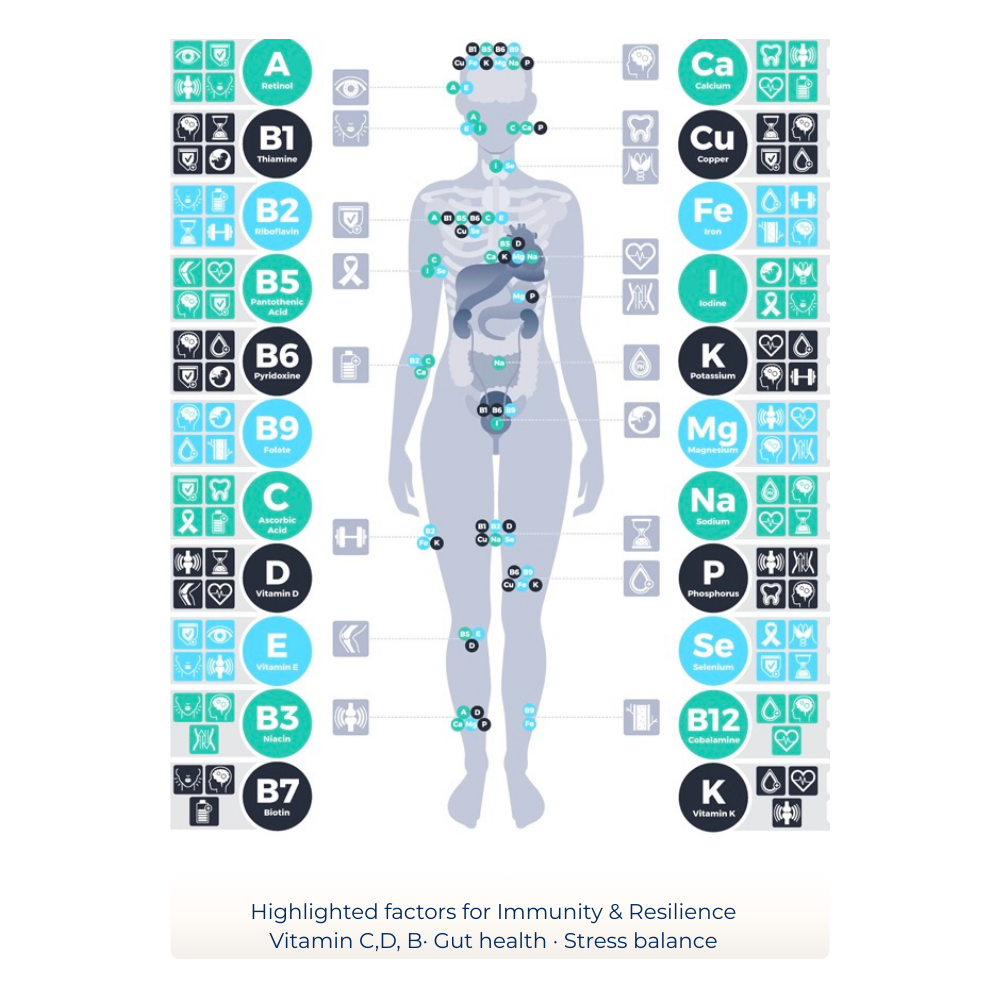
These findings are not diagnostic outputs. They function as orientation markers that may support integrative interpretation and guide further laboratory assessment or clinical correlation when indicated.
Report outputs
BodyMap translates identified immune-related patterns into structured orientation domains.
The report may include:
-
Nutritional axes relevant to innate and adaptive immune modulation
-
Lifestyle modulation domains influencing stress recovery cycles and inflammatory regulation
-
Gut-related patterns potentially affecting immune tolerance and barrier integrity
-
Escalation indicators suggesting when conventional laboratory evaluation may be appropriate
This framework supports integrative interpretation rather than isolated or reactive adjustments.
FAQ
Below are common professional questions regarding immune resilience and the role of BodyMap within this domain.
In which situations can BodyMap support immune-related concerns?
BodyMap may support cases where recurrent infections, slow recovery, inflammatory sensitivity, or resilience decline persist without clear acute pathology.
It structures regulatory patterns that may influence immune balance beyond isolated symptomatic treatment.
How does BodyMap approach immune resilience?
Rather than focusing solely on single immune markers, BodyMap organizes signals related to inflammatory tone, micronutrient regulation, stress modulation, and gut-associated immune interaction.
This supports professionals in exploring whether immune instability reflects broader systemic regulatory imbalance.
Does BodyMap replace laboratory immune testing?
No. BodyMap does not provide quantitative immune biomarkers or diagnostic thresholds.
It offers structured regulatory orientation that may inform whether targeted biological testing or specialist evaluation is appropriate.
What practical value does BodyMap add in preventive or resilience-focused contexts?
BodyMap enables professionals and organizations to frame immune resilience within a systemic regulatory framework.
Across clinical, corporate, or performance environments, this supports:
• Early identification of regulatory stress load
• Integration of nutritional and recovery strategies
• Structured communication around resilience decline
• Complementary positioning alongside preventive or medical programs
BodyMap supports immune stability by reinforcing regulatory coherence rather than targeting isolated immune variables.
Explore how BodyMap can support your professional framework
Contact us to discuss integration within your clinical, performance, or preventive setting.