
Endocrine Regulation and Vitality
Endocrine regulation shapes metabolic pace, stress adaptation, reproductive signaling, and energy stability.
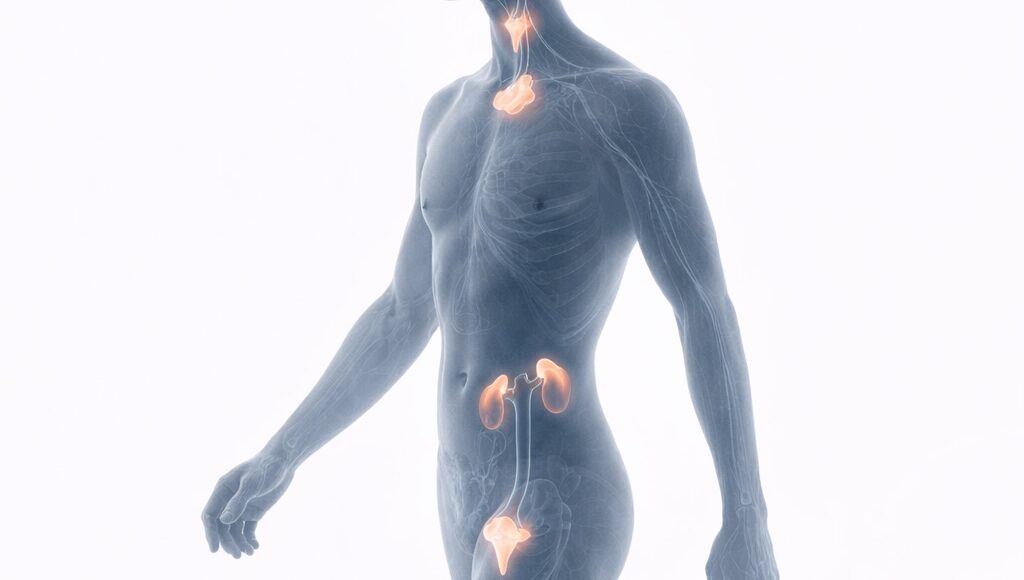
Systemic impact
Endocrine signaling operates across nearly every regulatory layer of the body. When coherence between thyroid, stress, and reproductive pathways shifts, the effects rarely remain confined to a single domain.
They may present as:
-
Persistent fatigue or reduced stamina
-
Low libido or diminished sexual vitality
-
Irregular cycles or vasomotor instability
-
Mood variability, irritability, or cognitive fog
-
Difficulty maintaining metabolic balance
These patterns are not isolated symptoms. They reflect shifts in interconnected hormonal and nutrient-dependent signaling networks that BodyMap can help contextualize.
Regulatory drivers
Thyroid signaling
-
Thyroid hormones influence metabolic pace, thermoregulation, and energy distribution.
-
Reduced signaling coherence may manifest as fatigue, weight variability, dermatological changes, or mood shifts.
-
Iodine, selenium, and iron function as critical micronutrient cofactors in thyroid regulation.
Reproductive hormone pathways
-
Estrogen and progesterone coordinate cycle regulation, fertility signaling, and bone integrity.
-
Testosterone contributes to anabolic tone, libido, and motivational drive.
-
Disruption in these pathways may present as libido changes, vasomotor instability, or affective variability.
Stress-axis modulation
-
Cortisol mediates adaptive stress responses; chronic elevation alters energy allocation and immune resilience.
-
Sustained stress load may suppress thyroid and reproductive signaling networks.
Micronutrient-dependent regulation
-
Zinc and selenium support hormone synthesis and receptor activity.
-
Vitamin D modulates endocrine receptor sensitivity and metabolic integration.
-
Deficiencies can amplify regulatory instability across hormonal systems.
Inflammatory signaling
-
Chronic inflammatory tone can alter cortisol dynamics and neurotransmitter balance.
-
Systemic inflammation may influence cognitive clarity, motivation, and overall vitality.
Professional Integration
Laboratory testing provides point-in-time biochemical measurements.
BodyMap adds a longitudinal, pattern-based layer by identifying functional trends and regulatory signals reflected in hair-derived data.
Within the Hormones & Vitality domain, the report may surface:
• Micronutrient distribution patterns relevant to thyroid and reproductive pathways
• Stress- and inflammation-linked modulation of endocrine signaling
• Indicators consistent with reduced thyroid drive or metabolic slowing
• Signals associated with reproductive hormone variability
These findings are not diagnostic outputs.
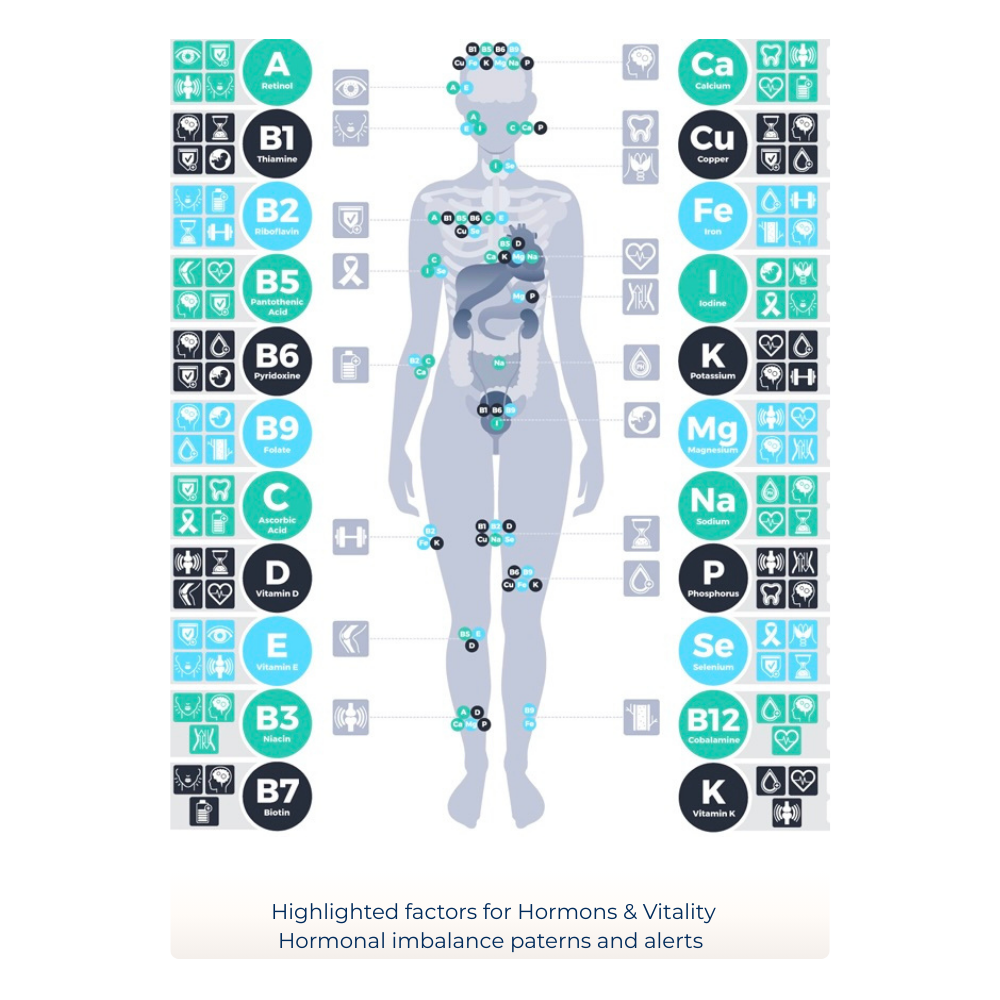
They function as orientation markers that may guide further laboratory assessment or clinical correlation when indicated.
Report outputs
BodyMap translates identified endocrine-related patterns into structured orientation domains.
The report may include:
-
Micronutrient distribution patterns relevant to thyroid and reproductive hormone pathways (e.g., zinc, iodine, selenium)
-
Regulatory signals associated with stress-axis modulation and inflammatory tone
-
Endocrine indicators suggesting variability in thyroid or reproductive signaling dynamics
-
Escalation indicators highlighting when conventional laboratory assessment may be appropriate
These findings are not diagnostic outputs. They function as orientation markers that may support integrative interpretation and guide further laboratory confirmation or clinical correlation when indicated.
FAQ
Below are common professional questions regarding endocrine regulation and the role of BodyMap within this domain.
When can BodyMap support hormone-related concerns?
BodyMap may support cases where patients report fluctuating energy, cycle irregularity, stress-related instability, or vitality decline without clear laboratory abnormalities.
It helps organize systemic regulatory signals before or alongside biochemical testing.
How does BodyMap assist in structuring hormonal evaluation?
Rather than isolating single endocrine parameters, BodyMap structures regulatory patterns related to stress modulation, micronutrient signaling, inflammatory tone, and metabolic interaction.
This supports professionals in identifying whether hormonal complaints may reflect broader regulatory imbalance.
Could BodyMap replace endocrine diagnostics?
No. BodyMap does not provide hormone serum values or diagnostic thresholds.
It may, however, support decisions regarding targeted laboratory confirmation and prioritization of investigation pathways.
How does BodyMap highlight hormone-related issues?
BodyMap enables professionals and organizations to position vitality decline within a systemic regulatory framework rather than isolated symptom management.
By structuring patterns related to stress modulation, micronutrient signaling, metabolic interaction, and hormonal coherence, it supports alignment between internal regulation and energy or performance objectives.
Across clinical, performance, or corporate environments, this allows:
• Earlier orientation before extensive diagnostic escalation
• Integration of nutritional and recovery strategies
• Clearer communication of fatigue and energy instability patterns
• Complementary positioning alongside medical or performance programs
BodyMap supports sustainable vitality by reinforcing regulatory stability rather than targeting isolated hormonal markers.
Explore how BodyMap can support your professional framework
Contact us to discuss integration within your clinical, performance, or preventive setting.