
Skin & Tissue Integrity
Tissue expression reflects systemic nutrient distribution, inflammatory tone, hormonal balance, and metabolic signaling.

Systemic impact
Dermal and epithelial tissues function as visible interfaces of systemic regulation. Alterations in nutrient distribution, hormonal signaling, inflammatory tone, and stress physiology frequently manifest through changes in skin, hair, and nail integrity.
They may present as:
-
Persistent inflammatory skin patterns or breakouts
-
Pigmentation irregularities potentially linked to micronutrient-dependent antioxidant pathways
-
Reduced dermal elasticity, collagen turnover, or barrier stability
-
Hair thinning, altered growth cycles, or shedding
-
Nail fragility or slowed regeneration
These manifestations are not isolated cosmetic phenomena. They often correspond to broader shifts in metabolic processing, endocrine balance, micronutrient sufficiency, and cellular renewal dynamics. Within this context, BodyMap provides structured orientation to support integrative interpretation.
Regulatory drivers
Micronutrient balance
-
Vitamins A, C, and E contribute to antioxidant defense and dermal repair dynamics
-
Zinc participates in epithelial turnover, sebum regulation, and barrier integrity
-
Iron and selenium influence oxygen-dependent cellular renewal processes
-
Biotin and B-vitamins support keratin structure and epithelial regeneration
Endocrine modulation
-
Thyroid signaling influences tissue turnover and metabolic support of dermal structures
-
Sex hormones regulate collagen synthesis, dermal elasticity, and hair follicle cycling
-
Cortisol dynamics modulate inflammatory tone and barrier stability
Gut–tissue interface
-
Microbiota composition influences systemic inflammatory signaling affecting skin integrity
-
Digestive efficiency impacts micronutrient absorption required for tissue repair
-
Food reactivity may contribute to persistent inflammatory activation
Inflammatory & oxidative regulation
-
Chronic low-grade inflammation may alter collagen remodeling and tissue resilience
-
Oxidative stress influences cellular aging pathways and pigment regulation
-
Antioxidant networks support redox balance within dermal tissues
Environmental & lifestyle modulation
-
Sleep quality affects nocturnal repair signaling and growth factor activity
-
Hydration status influences extracellular matrix stability
-
Psychological stress may alter barrier function through neuroendocrine pathways
-
UV exposure contributes to collagen degradation and pigment dysregulation
Professional Integration
Routine laboratory testing may identify isolated micronutrient or hormonal values. However, dermal and epithelial expression often reflects broader regulatory patterns that are not captured by single biomarkers.
BodyMap introduces a longitudinal, pattern-based layer by identifying functional trends reflected in hair-derived data.
Within the Skin & Tissue Integrity domain, the report may surface:
-
Micronutrient distribution patterns relevant to epithelial turnover and keratin structure
-
Indicators associated with collagen remodeling and extracellular matrix stability
-
Inflammatory and oxidative signaling patterns influencing tissue resilience
-
Gut-related signals potentially affecting systemic inflammatory load
-
Endocrine indicators (thyroid, cortisol, sex hormone dynamics) influencing tissue metabolism and follicular cycling
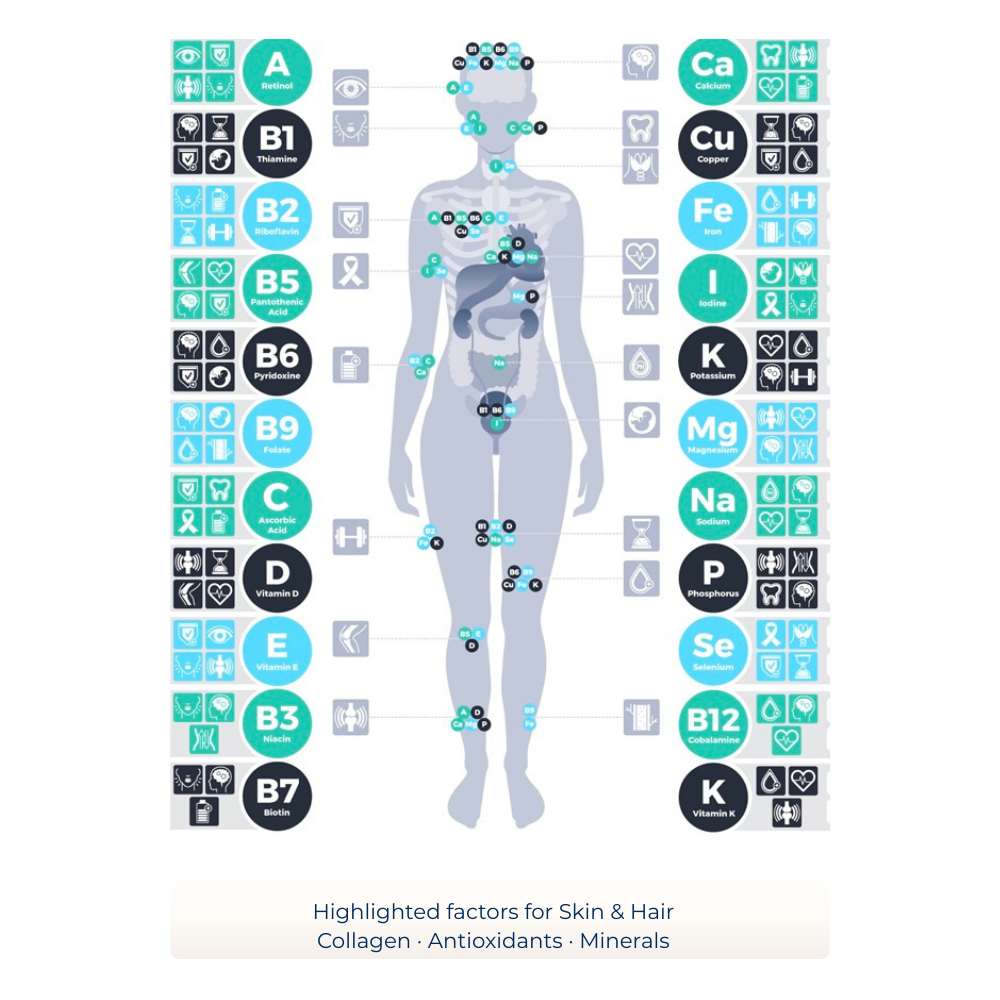
These findings are not diagnostic outputs. They function as orientation markers that may support integrative interpretation and guide further laboratory assessment or clinical correlation when indicated.
Report outputs
BodyMap translates identified tissue-related patterns into structured orientation domains.
The report may include:
-
Nutritional axes relevant to collagen remodeling, epithelial turnover, and keratin structure
-
Prioritization of micronutrient distribution patterns associated with barrier integrity and oxidative regulation
-
Lifestyle modulation domains influencing inflammatory tone, recovery signaling, and tissue resilience
-
Sequenced intervention priorities to support structured, non-fragmented implementation
This framework supports integrative decision-making rather than isolated cosmetic-focused adjustments.
FAQ
Here are some of the most common questions about skin, tissue integrity and how BodyMap can help.
How can BodyMap support skin and hair optimization?
Skin and hair outcomes are influenced by systemic regulation, not only external care.
BodyMap supports professionals in identifying whether internal regulatory patterns — including nutrient signaling, stress load, inflammatory tone, hormonal balance, and gut-related factors — may contribute to skin texture, resilience, hair density, or recovery quality.
It provides structured orientation when aesthetic or preventive goals require a broader functional perspective.
How does BodyMap complement aesthetic or dermatologic treatments?
BodyMap does not replace topical, procedural, or dermatologic interventions.
It may support practitioners by identifying systemic patterns that can influence tissue recovery, inflammation, collagen dynamics, or stress-related skin reactivity.
This can enhance coherence between internal regulation and external treatment strategies.
Can BodyMap identify contributors to hair thinning or skin fragility?
BodyMap does not generate diagnostic laboratory values.
It organizes functional signals that may suggest when further biological investigation (micronutrients, hormones, inflammatory markers) could be clinically relevant.
This supports structured decision-making rather than isolated supplementation or standalone interventions.
What practical value does BodyMap add to an aesthetic practice?
BodyMap allows practitioners to integrate systemic internal regulation into aesthetic care strategies.
By structuring signals related to nutrient balance, stress load, inflammatory tone, and hormonal modulation, it helps align internal physiology with external aesthetic interventions.
For practices, this means:
• Expanding consultation scope without increasing procedural complexity
• Offering patients structured internal optimization alongside external care
• Strengthening treatment coherence and long-term outcome stability
• Differentiating the practice through an integrated inside–outside approach
BodyMap complements aesthetic procedures by supporting the biological environment in which visible results evolve.
Explore how BodyMap can support your professional framework
Contact us to discuss integration within your clinical, performance, or preventive setting.